
Scratching noises at night. A musty smell you can’t quite place. A few droppings behind the fridge. These aren’t random annoyances; they’re your house telling you something’s off, and if you brush them aside, a small problem turns into an expensive one fast. Spot even two or three of the signs above? Don’t wait around for a full infestation; call the best pest control company in Delhi now.
Delhi doesn’t make this easy on anyone. Brutal summers, a heavy monsoon, mild winters, cockroaches, termites, rodents, and mosquitoes barely slow down here, in any season. That’s why homes in this city need more frequent checks than places with cooler, drier weather. A crack that looks harmless in March can eat through a beam by the time the monsoon lets up in September.
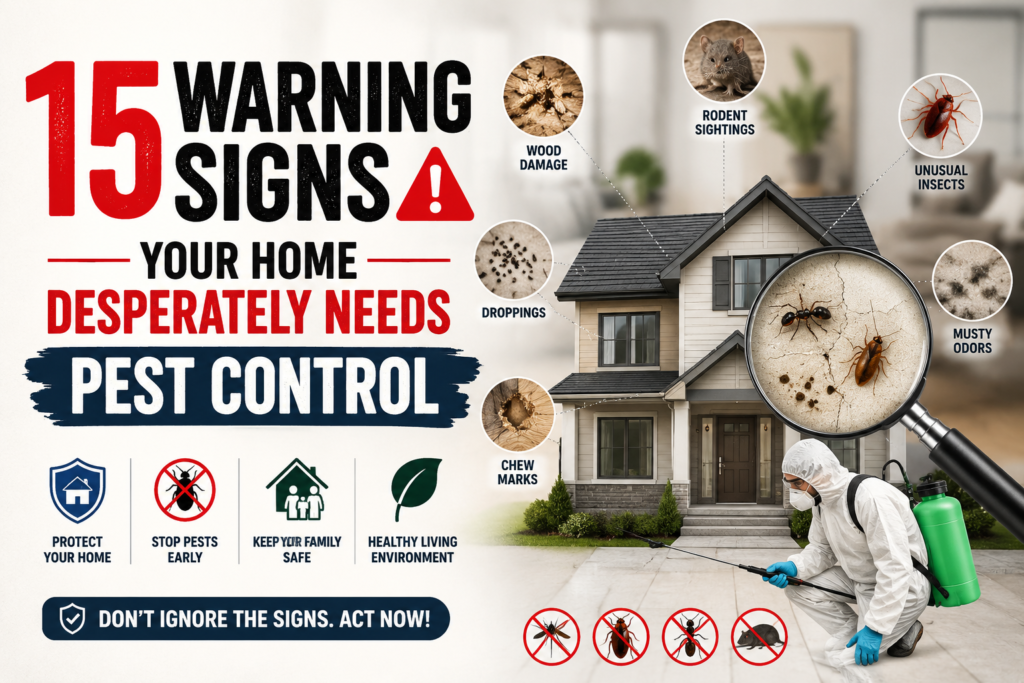
The 15 Warning Signs to Watch For
- Droppings in kitchens or cabinets — small dark pellets near appliances or baseboards usually mean rodents or cockroaches have set up nearby.
- A persistent musty or ammonia-like smell — cockroach secretions smell oily and stale, while rodent urine has a sharp, unmistakable ammonia note.
- Scratching or scurrying sounds in walls — especially at night, this almost always points to rats or mice nesting inside wall cavities or false ceilings.
- Grease marks or smudges along walls — rodents travel the same routes daily, and the oils in their fur leave dark, greasy trails behind.
- Chewed wires, wood, or food packaging — gnaw marks are a rodent’s calling card, and chewed wiring in particular is a real fire hazard.
- Discarded wings near windows or doors – a common post-monsoon sight across Delhi colonies and a strong sign of a termite swarm nearby.
- Hollow-sounding or damaged wood — tap on door frames, skirting boards, and furniture; termites eat wood from the inside out, leaving the surface deceptively intact.
- Mud tubes on walls or foundations — pencil-thin tunnels made of soil are how subterranean termites travel between the ground and your woodwork.
- Small holes in furniture, clothing, or upholstery — Carpet beetles, moths, and wood borers leave behind fabric and furniture damage that’s easy to mistake for wear and tear.
- Rust-coloured spots on bedding – a classic sign of bed bugs, usually accompanied by itchy red welts after sleeping.
- A sudden increase in spider webs indoors — more spiders inside your home usually means more insects for them to feed on.
- Seeing a pest during daylight hours — most household pests are nocturnal, so spotting one in daylight suggests an overcrowded nest pushing members out to forage.
- Pets acting unusually alert or restless — dogs and cats often sense rodents or insects moving inside walls well before humans notice anything.
- Standing water around coolers, drains, or plant saucers — during Delhi’s monsoon months, stagnant water can turn into an active mosquito breeding site within just a few days.
- Recurring pest problems despite repeated DIY sprays — if the same pests keep returning, the colony is likely hidden somewhere sprays can’t reach, and a professional inspection is overdue.
Why Delhi Homes Need Extra Vigilance
Pest problems in Delhi NCR don’t look the same street to street, which is exactly why cookie-cutter advice keeps failing people. Take the old South Delhi bungalows with all that heavy woodwork; termites move into the beams and just sit there for years, quietly hollowing things out, long before anyone notices a single visible sign. Head over to the denser West Delhi colonies, and the problem shifts: rodents and mosquitoes, usually riding in on shared drainage systems that never quite work the way they should. Then there’s Noida and Gurugram, where new towers keep going up and dragging construction-driven termite and mosquito trouble along with them.
None of these respond to the same treatment plan. So when you’re picking among the best pest control services in Delhi, local expertise should matter more than whoever quoted the lowest price;; it’s the difference between results that last and results you’re paying for again in six months.
What to Do the Moment You Spot These Signs
Leave the droppings, grease trails, and nests alone for now; they’re clues. A technician can trace the entry point and figure out where the nest actually is, and cleaning up too soon wipes that trail out. Same goes for DIY sprays: don’t stack five different ones on top of each other. Do that and cockroaches and rodents just get bait-shy, which makes them harder to kill off later, not easier.
Skip the guessing game on what pest you’re dealing with and book a free inspection instead. Termite damage, especially, is a trap; it looks minor right up until it isn’t. If you suspect termites, ask directly about a soil barrier or reticulation treatment. A surface spray won’t touch the colony sitting underground; it never does. And if this is monsoon season, don’t treat indoors and call it done, pair that with larvicide for the standing water around coolers, drains, and terraces, or you’re only solving half the problem.
Conclusion
None of these 15 signs are here to scare you. They’re here so you catch the problem while it’s still small enough to actually manage. By the time you spot pests crawling around in broad daylight or notice wood that’s visibly damaged, the infestation has usually been building for months already; you’re just seeing the tail end of it. Two or more of these signs show up? That’s your cue to call in professionals, not grab another can of spray off the shelf.
Free Pest Solutions is one of the best pest control services in Delhi NCR for exactly this moment. Free inspections, certified technicians, government-approved treatments — and they actually tailor the approach to where you live, whether that’s an old South Delhi bungalow, a packed West Delhi colony, or a high-rise in Noida or Gurugram. A same-day inspection from a name people trust costs a fraction of what you’ll spend, in money and in sleep lost, fighting a full-blown infestation six months from now.
FAQs
1. How often should I get pest control done in Delhi?
Most Delhi homes benefit from general pest control every 3 months, with an additional termite inspection annually and extra mosquito treatment during the July–October monsoon peak.
2. Can I treat a termite infestation myself?
Surface sprays rarely reach the colony, which usually sits underground or deep inside wood. A professional soil barrier or wood injection treatment is needed for lasting results.
3. Is professional pest control safe for children and pets?
Yes, when done by a licensed company using CIB-approved, low-toxicity chemicals. You’ll typically need to vacate the treated area for a few hours while it dries.
4. Why do cockroaches keep coming back after spraying?
Retail sprays only kill roaches on contact and miss eggs hidden in cracks and cabinet hinges. Gel baiting targets the full life cycle and is more effective long-term.
5. How much does pest control cost in Delhi?
Prices typically range from ₹1,000–₹1,500 for basic cockroach treatment up to ₹4,000–₹10,000 for full termite control, depending on property size and infestation severity.